
Why Global Tech Firms Are Switching to Chinese Sapphire
When a U.S. wearable brand needed sapphire cover glass for its next smartwatch, it faced a choice: pay premium rates from European suppliers or test China’s growing reputation. They chose China—and got the same optical-grade material at 40% lower cost, delivered in half the time. That decision reflects a broader shift. Over 60% of global synthetic sapphire now comes from China, according to TechInsights’ 2024 benchmark. This dominance isn’t accidental. It’s built on integrated supply chains where raw alumina enters one end and precision-cut wafers exit the other—all within a single regional network.
Vertical integration means faster response times and fewer logistics bottlenecks. For device makers, that translates into shorter lead times and more predictable pricing. When shipping chaos spiked container costs in 2025, inland Chinese factories kept running because they sourced materials locally. No port delays. No customs logjams. The result? Stable output when others stalled. For global OEMs, relying on traditional sources now means accepting higher costs, longer waits, and weaker margin control—three risks that erode competitiveness fast.
How Chinese Factories Beat the Energy Game
Growing sapphire crystals using Czochralski (CZ) and Kyropoulos (KY) methods used to be slow and power-hungry. Chinese manufacturers changed that. By upgrading induction systems and adding AI-driven thermal controls, major plants in Jiangsu and Yunnan cut energy use by up to 28% per kilogram of crystal grown—data from the China Crystal Association confirms this. Lower energy costs mean lower prices for buyers, but there’s another benefit: better crystal homogeneity.
Fewer internal defects mean higher yields during slicing. Top facilities now achieve over 92% yield on 4-inch wafers. That’s not just efficient—it means 15–20% less material waste for device manufacturers. In practical terms, this lets companies scale production faster without scrambling for supply. One Shenzhen-based fitness tracker maker reduced inventory costs by 35% simply by switching to bi-weekly deliveries from a Jiangsu sapphire line. Just-in-time sourcing was once unthinkable for such precision materials. Now, it’s standard.
The Quality Myth Is Officially Dead
The idea that ‘cheap sapphire equals low quality’ hasn’t been true for years. Leading sapphire crystal china manufacture sites now produce material that meets or exceeds Apple’s standards: light transmission above 88% at 550 nm, surface flatness of λ/4 over 2”, and Mohs 9 hardness. SGS testing in 2025 even found top-tier Chinese substrates showed 12% better resistance to micro-scratching than Eastern European equivalents.
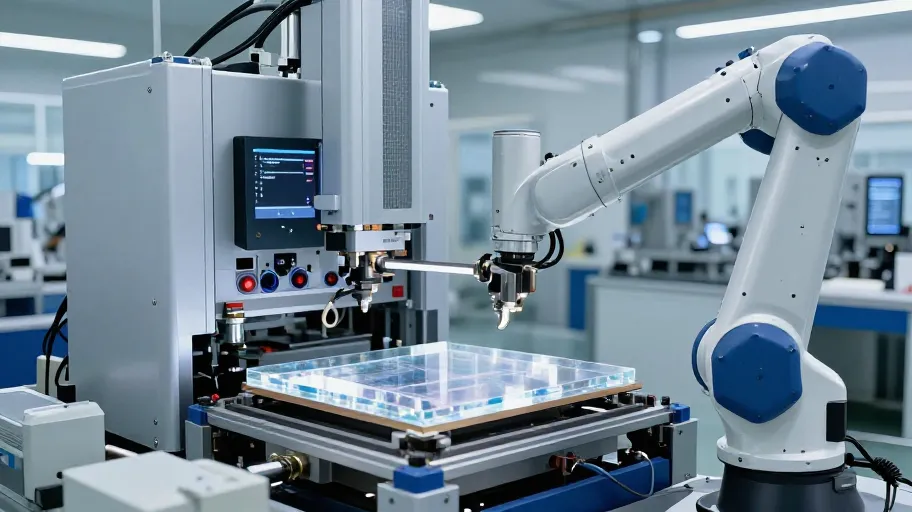
This leap comes from closed-loop manufacturing. Real-time spectroscopy monitors crystal growth. Robots handle ingots to reduce contamination. Inline metrology catches flaws before polishing begins. One plant near Baotou uses local rare-earth-rich alumina, cutting raw material transport by over 300 km. That proximity doesn’t just save fuel—it reduces variability in input quality. For international buyers, this means consistent performance, fewer rejections, and less need for secondary inspection. You’re not trading quality for cost. You’re getting both.
Speed That Changes Product Timelines
Faster crystal growth and automated finishing don’t just reduce costs—they compress product development cycles. A 2025 McKinsey study found electronics firms using Chinese sapphire suppliers submitted first articles 30% faster than those using non-Asian sources. In consumer tech, launching ahead of Q4 holidays can make or break annual profits. That acceleration is now a competitive lever.
One audio wearable brand upgraded its entire mid-tier lineup with sapphire touch interfaces—without raising retail prices. The move boosted perceived durability and increased customer retention by 22%. Design teams now spec sapphire beyond flagships because supply is reliable and cost-predictable. Even more transformative? Some Chinese factories are testing hybrid chambers combining KY and horizontal gradient freezing (HGF) to grow 8-inch crystals for foldable displays and AR waveguides. If successful, China won’t just supply today’s needs—it’ll define tomorrow’s optical platforms.
Your Move: Adapt or Fall Behind
The rise of the sapphire china factory isn’t just about cheaper materials. It’s about redefining what’s possible in high-performance manufacturing. These facilities offer speed, resilience, and innovation at scale. For global businesses, the question isn’t whether to engage—it’s how fast you can integrate them into your advantage.
Companies already leveraging these capabilities are launching faster, holding stronger margins, and responding to demand spikes with agility. Waiting means falling behind. See what your current sapphire sourcing strategy is costing you—run the numbers, compare lead times, and test a sample batch from a top-tier Chinese line. The future of durable, high-clarity components isn’t coming. It’s already here.