
Why sapphire china factories set the global price floor
When a U.S. smartwatch maker faced a 14% price hike on sapphire lenses last year, the trigger wasn’t raw material costs or tariffs—it was yield. Chinese manufacturers had improved their boule growth efficiency so much that staying competitive meant matching those margins or losing bids. The real driver of sapphire glass prices? Factory-level mastery of crystal growth and finishing, concentrated in hubs like Kunshan and Dongguan.
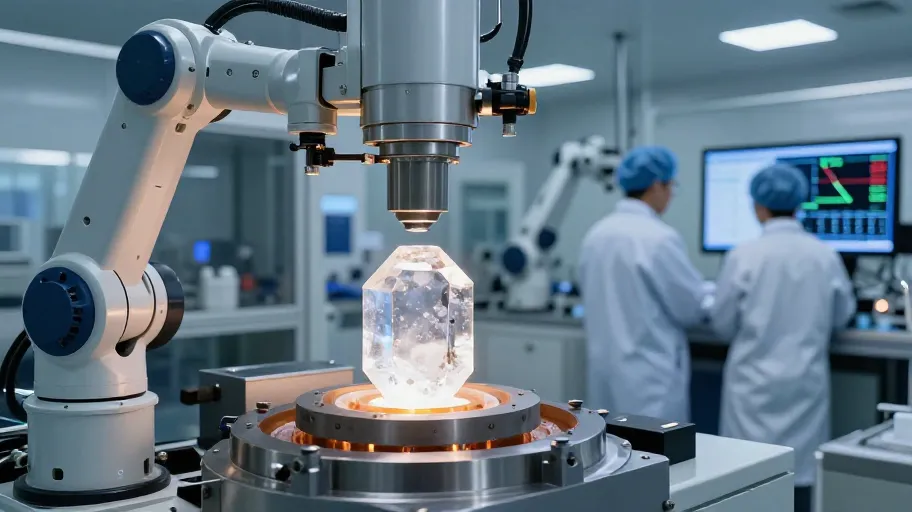
High-purity sapphire crystal growth means lower unit costs because fewer defects reduce waste. Chinese facilities using advanced heat exchanger (AHP) methods achieve up to 85% usable yield from 200mm boules—compared to 62% globally. That 23-point gap translates directly into cost advantage: more sellable material per run, less energy wasted, faster turnaround. For OEMs, this means access to stable pricing only if they align with high-yield partners early.
This isn’t about cheap labor. It’s about repetition, data-driven tuning, and infrastructure density. One European watch brand moved prototyping to a sapphire china manufacture cluster in Jiangsu and cut development time by 40%. Shared metrology labs, co-located CNC suppliers, and standardized polishing lines let them reduce unit cost by 22%, even with shipping added. They launched six months ahead of a competitor—proof that proximity to the ecosystem beats isolated innovation.
The hidden cost advantage in post-growth processing
Cutting and polishing aren’t just final steps—they account for nearly 60% of final lens cost, according to a 2024 Fraunhofer Institute analysis. This is where China’s sapphire china factory networks compound their lead. Shared diamond-wire saws, automated polishing cells, and anti-reflective coating chambers allow multiple clients to share capital-intensive tools at high utilization.
A single AR-coating line running at 90% capacity means 35% lower cost per unit than a standalone EU facility at 50% load. That’s throughput intelligence: spreading fixed costs across volume. So when companies try to onshore sapphire production, they can replicate machines—but not the ecosystem density that makes them economical.
The implication? Buyers relying on spot quotes are exposed. Those who integrate with sapphire china partners using collaborative forecasting secure better pricing and priority access. One North American AR glasses developer shared design specs with a manufacturer’s growth simulation software and saw first-pass yield improve by 28%—cutting landed cost by 17% over 18 months. That’s what happens when you treat procurement as engineering, not purchasing.
Efficiency comes with strategic exposure
Dependence on China’s sapphire crystal china manufacture network brings risk. As one procurement lead admitted in 2025: “We’re locked into a system we can’t replicate.” A sudden shift in energy allocation or high-purity alumina import rules could disrupt supply within weeks. Non-Chinese producers lack idle capacity to absorb shocks—meaning no buffer during crises.
Yet alternatives stall because they underestimate the value of collective learning. In China’s clusters, when one factory improves annealing cycles, others adopt it fast. A 5% yield gain takes under six months there; elsewhere, it can take 18. That speed compresses product timelines so tightly that even geopolitically cautious firms return—not out of preference, but necessity.
The cost of failure in sapphire production isn’t just scrap. It’s delayed launches, margin erosion, and reactive contracting. Chinese factories have driven down that cost systematically through specialization and vertical coordination. For buyers, the lesson is clear: understanding how sapphire is economically made—not just technically—is the only way to hedge against disruption.
Turning insight into procurement strategy
Traditional sourcing models fail in this market. Annual bids and RFQs can’t capture the dynamics of yield gains or capacity shifts happening monthly in sapphire china factories. Forward-looking teams now use joint yield optimization programs and AI-driven defect prediction to lock in advantages before they hit the open market.
Sharing roadmap data with key partners means earlier access to process improvements and price stability. That’s not vendor management—it’s strategic alignment. Because in a market shaped at the factory floor, visibility equals leverage.
For decision-makers, the takeaway is urgent: sapphire glass prices are no longer set by commodity inputs. They’re set by operational excellence deep inside China’s manufacturing core. The next wave of competitive advantage won’t go to those who merely buy glass—but to those who understand how it’s grown, finished, and priced. Ready to turn procurement into a strategic lever? Start by mapping your supply chain to the real drivers of cost—not the outdated ones.