
From Doubt to Dominance in Five Years
Just five years ago, sourcing sapphire sheets from China seemed risky. Engineers worried about inconsistent crystal quality, poor optical performance, and unreliable scalability. Today, those concerns have flipped: leading Chinese manufacturers deliver sapphire sheets with lower defect rates, higher throughput, and faster turnaround than many legacy suppliers. This shift means you can now get industrial-grade sapphire without sacrificing precision—because systemic innovation has redefined what’s possible in crystal growth.
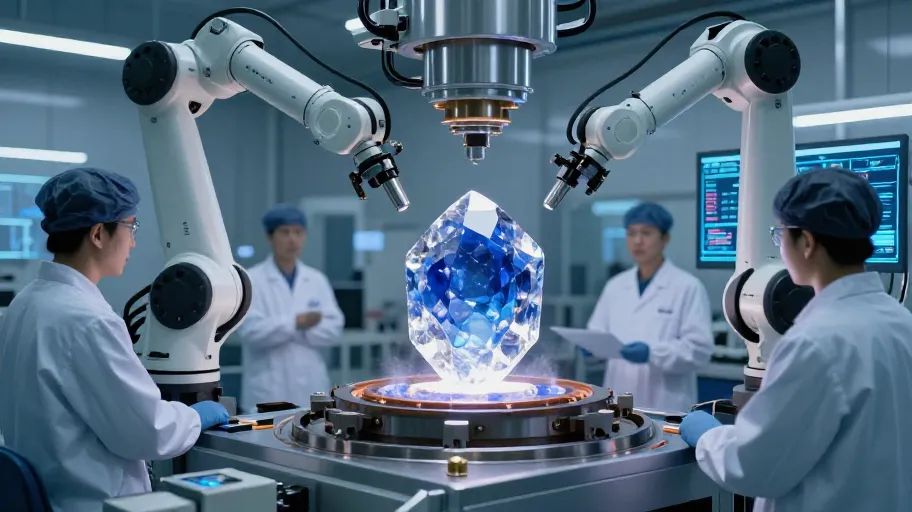
The turning point was mastering large-diameter sapphire crystal growth using advanced Kyropoulos (Ky) and Heat Exchanger Method–Kyropoulos (HE-Ky) techniques. By refining cooling protocols, crucible design, and argon flow dynamics in collaboration with national materials institutes, Chinese engineers achieved stable 8-inch diameter boules by 2022. That means up to 40% more usable wafers per crystal compared to 6-inch alternatives—because larger boules reduce edge waste and improve material utilization at scale.
This isn’t just lab success—it’s factory-floor impact. One North American wearable maker cut substrate-related assembly rejects by 22% after switching to HE-Ky–grown sapphire sheets from a certified Chinese supplier. Lower internal stress and fewer microcracks mean fewer field failures, because better crystal structure directly improves product reliability and reduces warranty costs.
AI That Sees Defects Before They Form
What sets top sapphire china factories apart isn’t just hardware—it’s intelligence embedded in the process. Leading sites now use AI-driven monitoring systems that analyze data from over 200 sensors during each crystal pull. These models predict defects like dislocation clusters or color zoning up to 72 hours before they become irreversible. That means automated adjustments to heater power, pull rate, or rotation happen in real time—because machine learning turns historical data into proactive control.
The result? First-pass yields above 85%, far exceeding the 68% industry average reported in 2020 by Materials Processing International. Higher yield means lower unit cost and more consistent supply, because fewer rejected boules translate directly into stable inventory for high-volume production lines.
For engineering teams designing ruggedized devices, this level of consistency matters. Independent tests show polished sapphire sheets from top Chinese sources achieve surface roughness below 0.45 nm Ra—on par with German and U.S. equivalents. That means minimal light scattering in AR headsets or LiDAR windows, because ultra-smooth surfaces preserve optical integrity under demanding conditions.
Full Control from Powder to Final Polish
The real advantage of a sapphire china factory isn’t just technical skill—it’s vertical integration. Many facilities now handle everything in-house: synthesizing ultra-high-purity α-alumina (>99.999%), directional solidification, core drilling, multi-wire slicing, double-side lapping, and final CMP polishing—all on one campus. That means tighter traceability, faster iteration, and stronger IP protection, because no design specs leave the facility until the finished sheet ships.
For medical device makers or defense contractors, this model eliminates exposure across third-party vendors. One Shandong-based factory enabled a client to co-develop custom bevel profiles and anti-reflective coatings under strict NDA, locking down geometry from the powder stage. That means full ownership of proprietary designs, because integrated production prevents leakage at outsourced steps.
It also slashes development time. The same line producing 50 evaluation samples can ramp to 50,000 units monthly with identical parameters. That means no ‘valley of death’ between prototype and mass production, because process continuity accelerates commercialization—critical for fast-moving markets like consumer AR or drone systems.
Why This Shift Changes Everything
Geopolitical instability and fragile supply chains have made resilience a strategic priority. Relying solely on traditional sapphire sources creates vulnerability. But China’s rise offers more than backup capacity—it delivers a new standard where precision, scalability, and speed aren’t trade-offs. That means forward-thinking OEMs gain leverage, because access to technically mature, compliant, and agile partners reduces risk while improving performance.
You don’t need to abandon legacy suppliers to benefit. But you should reassess them against current capabilities. A sapphire sheet from China is no longer a compromise—it’s a competitive upgrade. Because when your material source already solves the hardest problems in crystal growth and processing, your team can focus on innovation instead of mitigation.
See how your next design cycle could move faster, cost less, and perform better—start with a sample comparison. Real data beats assumptions every time.