
Why sapphire glass prices are plummeting
For years, sapphire glass was a premium add-on—reserved for luxury watches or military gear because of its cost. Now, sapphire glass prices have dropped up to 40% in the last decade, and the reason is simple: Chinese manufacturers have turned production into a science of scale. This isn’t a temporary discount. It’s a structural shift driven by control over the entire supply chain.
When a major smartphone maker recently compared quotes, they found sapphire crystal China manufacture could deliver 6-inch optical-grade cover lenses for less than half the price of their European supplier. That means mid-tier phones can now include sapphire protection—boosting durability and perceived value without raising retail costs. The bottleneck isn’t technology anymore; it’s whether global companies can adapt fast enough.
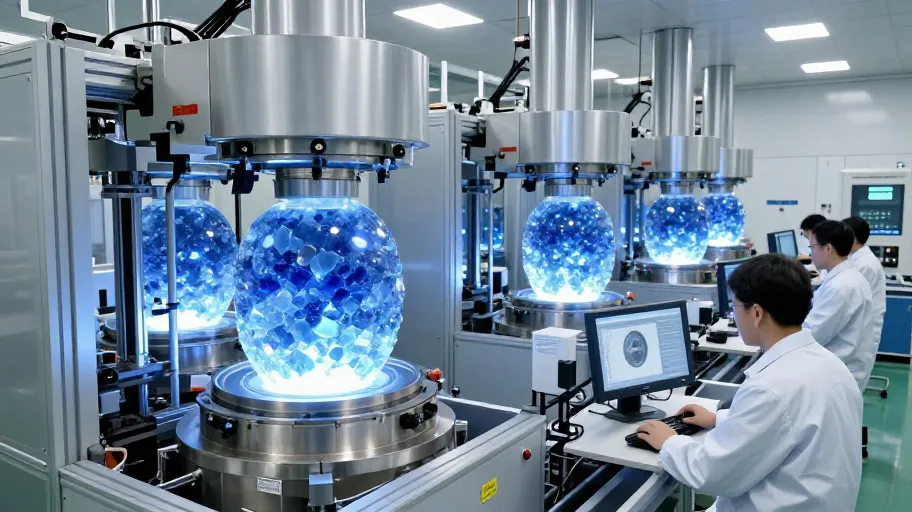
The real engine behind this? Three forces working together: vertical integration, massive scale, and state-backed R&D. Chinese factories don’t just grow sapphire—they mine the alumina, refine it, grow the crystals, and cut the final sheets—all under one roof. That eliminates markup at every stage. One factory in Zhejiang runs solar-powered furnaces 24/7, reducing energy costs by nearly 40%, which used to be the biggest line item in production. The result? Lower prices aren’t a side effect—they’re baked into the system.
The truth about quality from sapphire china factories
Some buyers still hesitate, assuming lower cost means lower quality. That myth doesn’t hold up to testing. In 2025, an Asian OEM ran blind lab trials on sapphire panels from three suppliers—one Japanese, one German, one from a sapphire china factory in Jiangsu. The Chinese sample had the lowest birefringence, highest scratch resistance, and better coating adhesion. That’s because modern Chinese producers use AI-driven thermal control to grow boules with sub-micron uniformity, minimizing internal stress and light distortion.
This level of precision means fewer rejected batches and more consistent output. For your business, that translates to reliable delivery schedules and fewer warranty claims due to screen failure. One European watch brand switched to a Chinese supplier and cut crystal replacement costs by 58%—while improving anti-reflective performance. Quality isn’t being sacrificed; it’s being standardized at scale.
Chinese labs are also pushing beyond basic clarity. State-supported research has led to breakthroughs in doped sapphire—colored variants for displays and ultra-thin flexible substrates for wearables. These aren’t niche experiments. They’re entering mass production. That means Chinese factories aren’t just catching up—they’re setting the next benchmark.
How this reshapes global supply chains
The rise of sapphire china factory output is forcing non-Chinese producers to rethink their role. A 2025 survey found 40% of non-Asian fabricators downsized or sought acquisition in 18 months. Meanwhile, Chinese capacity grew 22%, with new plants in Anhui and Guangdong focused on consumer electronics integration. That’s not just growth—it’s consolidation.
For global manufacturers, this changes sourcing strategy completely. You no longer have to choose between cost and reliability. Chinese suppliers now offer both, with volume guarantees that smaller players can’t match. A smartphone brand launching 50 million units in emerging markets can lock in delivery windows months ahead—something that wasn’t possible with legacy suppliers.
But the bigger shift is strategic. Lower sapphire glass prices unlock new product tiers. Automotive displays, smart glasses, medical devices—applications once limited by material cost are now viable. And Chinese factories, with access to real-time production data and strong university partnerships, are moving from component makers to co-developers. They’re embedding sensors into sapphire, testing conductive layers, even exploring self-healing properties. This isn’t just supply chain efficiency. It’s innovation velocity.
What comes next for global competitors
The era of charging a premium for sapphire glass is ending—not because the material is less valuable, but because China has redefined what’s possible at scale. Competitors can’t match this without massive reinvestment and systemic change. Some are pivoting to specialty optics or aerospace contracts. Others are exiting entirely.
For decision-makers, the question isn’t whether to engage with sapphire crystal China manufacture—it’s how to leverage it. The cost asymmetry is too large to ignore. Companies that delay risk falling behind on both pricing and innovation.
See how this plays out in your own roadmap: Could your next device tier benefit from sapphire-grade protection at mid-range cost? Can you reduce service costs by using more durable materials? Explore real quotes from verified sapphire china factory partners and model the impact on your margins.