
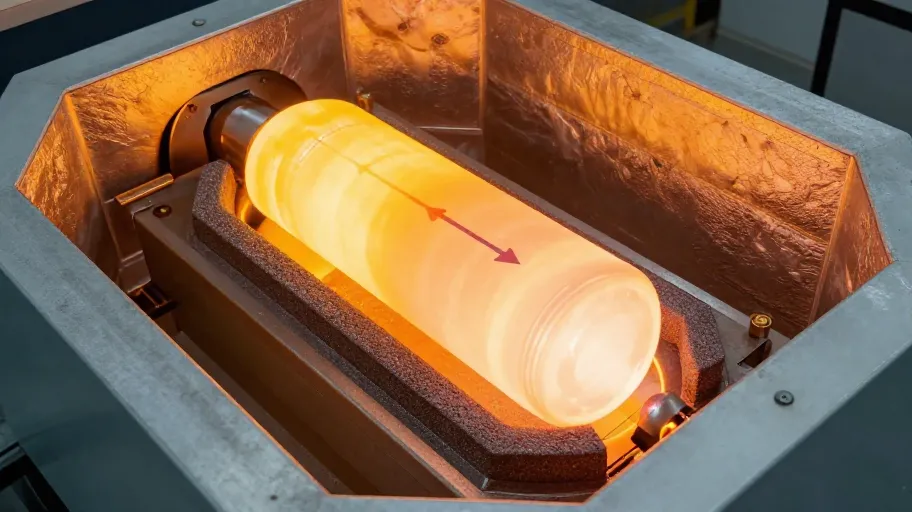
<p>The Kyropoulos method is currently the mainstream process for growing large-size, high-quality sapphire single crystals. It can produce ingots weighing tens of kilograms and is widely used as a raw material for LED substrates, optical windows, and smartphone cover plates.</p><p>The core of this process lies in the design of the thermal field and the matching of growth parameters: the heater and insulation structure determine the longitudinal and radial temperature gradients within the furnace, directly affecting crystal shape control. After introducing the seed crystal, a combination of slow cooling and pulling allows the crystal to gradually expand on the melt surface in a controlled manner. Throughout the entire process, it is essential to maintain a smooth solid-liquid interface to prevent polycrystalline formation and mosaic structures caused by excessive undercooling of components.</p><p>Defect control focuses on three typical issues: dislocation lines and low-angle grain boundaries reflect the structural integrity of the crystal; bubbles and scattering particles often originate from overheating of the melt or insufficient purity of the raw materials; cracking is related to the cooling rate and the diameter of the crystal. By purifying the raw materials, performing vacuum degassing, optimizing the cooling curve, and relieving thermal stresses during the annealing stage of the ingot, the usable yield of large-sized ingots can be maintained at a high level, providing a consistent and high-quality material foundation for subsequent slicing and polishing processes.</p>