
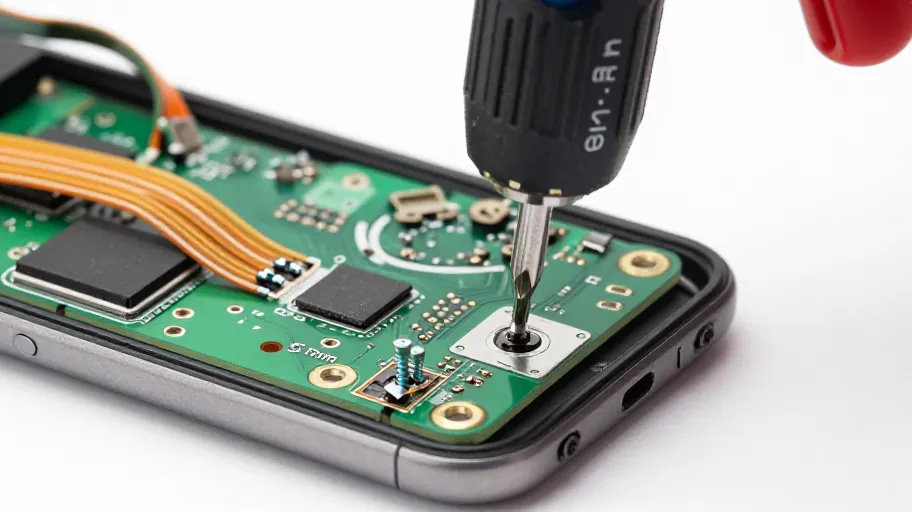
In the interiors of smartphones and wearable devices, miniature screws ranging from M1 to M2 specifications play a crucial role in securing key structural components. Even a single slip of the screwdriver tip can scratch flexible cables or puncture battery cells; thus, assembly processes allow for tolerances measured in fractions of a millimeter.
One challenge lies in torque precision. The appropriate tightening torque for miniature screws often falls below ten newton-millimeters, a range where standard electric screwdrivers lack sufficient accuracy. Therefore, closed-loop servo-driven electric screwdrivers are employed, ensuring torque fluctuations remain within ±3%.
Another challenge is material strength. Small-sized screws must also withstand drop impacts. Commonly, carbon steel undergoes quenching followed by surface nitriding to achieve both strength and toughness.
A third challenge involves anti-loosening designs. Adhesive dispensing, nylon washers, and variable-thread profiles each have their own applications. With the trend toward thinner and lighter designs, low-profile anti-loosening head types have become the new mainstream.
The rapid pace of consumer electronics innovation continuously drives advancements in assembly techniques. In this context, seemingly inconspicuous miniature screws serve as a cornerstone for the overall reliability of the device.